
Florence Previous-Resident Eras
Choose the source by period and question. Current parcel evidence names an owner, while the Recorder gives a transfer chain. The verified 1960 directory has a reverse street section that can name adult household members at an address. The released federal census reaches through 1950 under the 72-year access rule. Florence permit coverage is not published as a complete date run, so the portal and records request are evidence routes rather than promises of a file for every year.
| Source | Years it covers | Where held | What it can show |
|---|---|---|---|
| Recorded Document Search | May 23, 1980 to current online | Pinal County Recorder | Parties, transfer dates, document type, legal description |
| Earlier deed books and indexes | Before the web cutoff; oldest run not published | Recorder counter and staff | Earlier links in the ownership chain |
| Mullin-Kille reverse directory | Verified 1960 volume | Arizona Memory Project | Adults, address order, owner mark, phone, spouse and dependents |
| Federal census | Public through 1950 | National Archives and research databases | Household members and relationships in released schedules |
| Permits and code records | Current portal; start year unverified | Town of Florence | Work, dates, applicant or owner tied to an address |
Start with deeds for owners after 1980. Start with the directory or released census when the main question is occupancy near mid-century. Move between sources only after recording the exact street form, APN, and legal description.
Anchor Florence Past Residents Today
The current Pinal County Assessor Parcel Search is the anchor for a Florence address. Enter street number, direction, name, and suffix. Copy the owner, APN, property location, and legal-description path. Do not substitute the owner’s tax-mailing address for the property address. The mailing route says where a notice goes, not who occupied the Florence parcel.
A legal description is the land identity used in recorded documents. It often survives a postal or street-label change better than an address alone. If a current address does not match an old clipping, directory entry, or deed, compare the parcel map and recorded plat before deciding they describe different properties. Florence was laid out from Levi Ruggles’s townsite, so original plats can be important bridges for historic lots. The Library of Congress Sanborn map collection is an added search route, but the research did not verify a digitized Florence sheet run.
Walk Florence Deeds Backward
The Pinal Recorded Document Search uses Name, Fee Number, Document Type, Record Date, Doc Legal, and Docket/Page modes. It does not offer a verified situs-address search. Begin with the current owner from the assessor and locate that person’s acquisition deed. Then turn the seller into the next backward subject.
- Copy the current APN, owner, and legal description from the assessor record.
- Search the owner as a grantee, the person or entity receiving the property, and open the likely acquisition entry.
- Record the fee number, date, document type, grantor, grantee, and legal description before moving on.
- Search that grantor as an earlier grantee, test spelling variants, and repeat the pattern.
- When the chain reaches the online cutoff, ask the Recorder for the older grantor and grantee books.
The chain proves changes in title. It does not prove that each owner lived there. A trust, estate, company, or owner with a separate mailing address can appear in the chain, while a renter may never appear at all.
- Grantor and grantee
- The grantor transfers an interest; the grantee receives it.
- Chain of title
- The linked sequence of recorded transfers for the same land.
- Legal description
- The recorded land description used to match a parcel despite address changes.
- Criss-cross directory
- A directory organized by street and house number for reverse address research.
Before Florence Deeds Went Online
Acclaim’s exact online starting point is May 23, 1980. That is an access cutoff, not the birth of Florence property records. Earlier documents require the Pinal County Recorder’s staff, counter, mail, or email channel. The Florence counter is at 31 N. Pinal Street, Building E; the office can also be reached at 520-866-6830 or PO Box 848, Florence, AZ 85132. County guidance lists weekday counter hours of 8 a.m. to 4:30 p.m., while a directory header lists 8 a.m. to 5 p.m., so confirm the closing time.
Provide the last verified grantor or grantee, an approximate year, the legal description, and any known fee, docket, page, book, or map reference. Copies are $1 per page, plus $3 for certification of a document. An unofficial copy may be enough for family or house history, while a certified copy serves a different evidentiary purpose.
Note: A blank web result before May 1980 calls for the Recorder’s older books, not a conclusion that no deed exists.
Find Florence Previous Residents in 1960
The verified household source is the digitized 1960 Mullin-Kille Casa Grande, Coolidge, Florence and area Consurvey City Directory. Its householders section runs by alphabetized street and house number, with cross streets inserted. The publication includes all persons over 18, identifies a wife in parentheses, gives a following dependent count, and marks ownership. It may also show an occupation, employer, phone, and whether the entry is a householder or another resident.
Search the current and historic street forms, then copy the full entry with its symbols. The symbol guide matters. An omitted owner mark indicates renter status under the publisher’s scheme, while a printed owner mark supports an ownership claim that should still be checked against the deed chain. The Florence city directory page covers the collection itself; the previous-residents task uses the street section as one dated snapshot.
The Town’s historical records repository provides another local document route.
Laserfiche is a document repository, not a household roll, so search for address-specific council, department, permit, or project files rather than names alone.
Pair Florence Directories and Census
The 1950 federal census and 1960 directory create a useful ten-year bracket. The National Archives census research service explains access under the 72-year release rule. First identify the household in the 1960 reverse section. Then locate the street or household in 1950, using names and nearby households when numbering or indexing differs.
- Transcribe the 1960 street entry, including spouse, dependent count, owner mark, phone, and occupation.
- Search the 1950 census for the householder and compare family names, ages, and relationships.
- Check the 1954 Arizona Educational Directory if a school employee, official, address, or PO box provides a bridge.
- Test the 1926 Arizona State Business Directory for an earlier Florence business or proprietor link.
- Use newspapers, probate, cemetery, and deed evidence to explain people who enter or leave the timeline.
A PO box or general-delivery line is not a residence. Keep such entries as contact evidence until another source connects the person to the physical Florence property.
Search Both Florence ZIP Eras
Florence changed from historic ZIP 85232 to current ZIP 85132 on July 1, 2009. USPS reported that the broader Pinal prefix realignment changed 1,206 deliveries. The same property trail may therefore appear under either code. Search both when a deed, permit, tax-mailing entry, newspaper item, or saved address crosses that date.
The ZIP switch changed mail geography, not title. Keep the APN and legal description at the center of the timeline. Also remember that 85132 extends beyond Town limits. Compare the parcel with Florence boundary and annexation maps before sending a permit or code request to a Town office. This is especially important where Magic Ranch and Arizona Farms annexations were rescinded.
Date Florence Address Changes
Permits, planning files, code matters, license records, and council packets can date work at an address. They may identify an owner, applicant, contractor, agent, or complainant. Those roles are evidence of a transaction or file, not automatic proof of residence. Florence routes current residential permits through SmartGov and maintains a Directory of Documents. Older or unindexed material can be requested from Community Development or the Town Clerk with an address, parcel, permit number, and date range.
The Town has proposed searchable Laserfiche scanning for Community Development, Public Works, cemetery, and possibly Community Services files, with $50,000 projected in both FY2026 and FY2027 materials. Until that work is complete, the online repository and counter may hold different parts of a Florence address trail. Preserve the request response alongside the deed and directory notes.
Note: A permit date can mark a change to the property, but the named applicant may not be a past resident.
Close a Florence Resident Trail
Obituaries, probate files, death records, and cemetery files can close the last part of an address timeline. Pinal County Superior Court keeps probate matters, but probate cases are excluded from the statewide Public Access portal. Request a known probate file through the Clerk of the Superior Court instead. If federal litigation is relevant to a named former owner or estate, PACER is the official federal court route, with account, search, and cost rules that differ from local court access.
The federal search entry is included among the successful previous-resident captures.
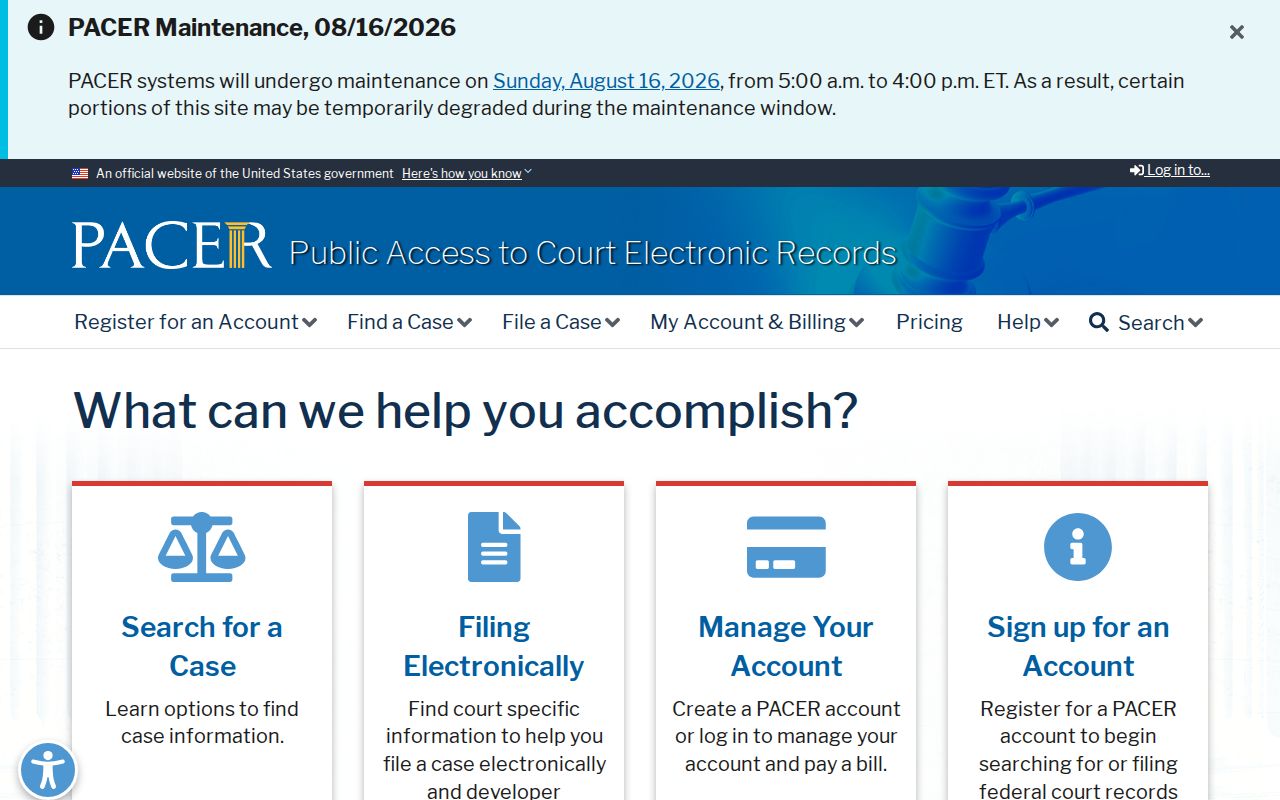
Use it only after an official clue points to a federal case. A same-name result does not establish a link to the Florence address.
For deaths old enough to be public, A.R.S. §36-351 transfers Arizona death certificates after 50 years and birth certificates after 75 years to historical access.
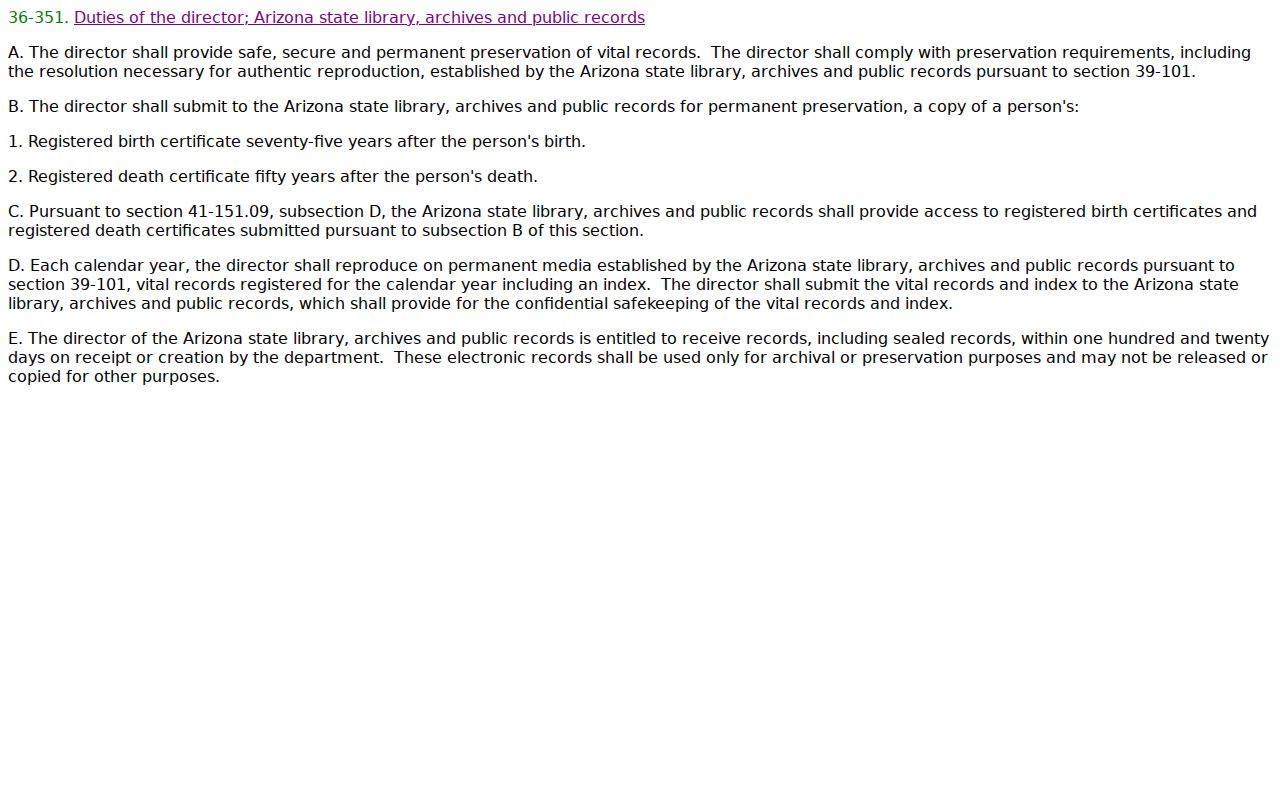
The historical certificate can add residence, occupation, parents, and informant details, while the online image remains noncertified.
Florence Resident Cemetery Clues
Florence Memorial Park has a revised 2025 map plus plot and contact forms, but no complete official name index was found. Town staff keep field and file information beyond the online subset. The park is open daily from 6 a.m. to 7 p.m.; staff can be reached at 520-868-7583 or 520-868-7040. Ask with the full name, approximate death date, and known relative.
The Florence Memorial Park source is shown here.
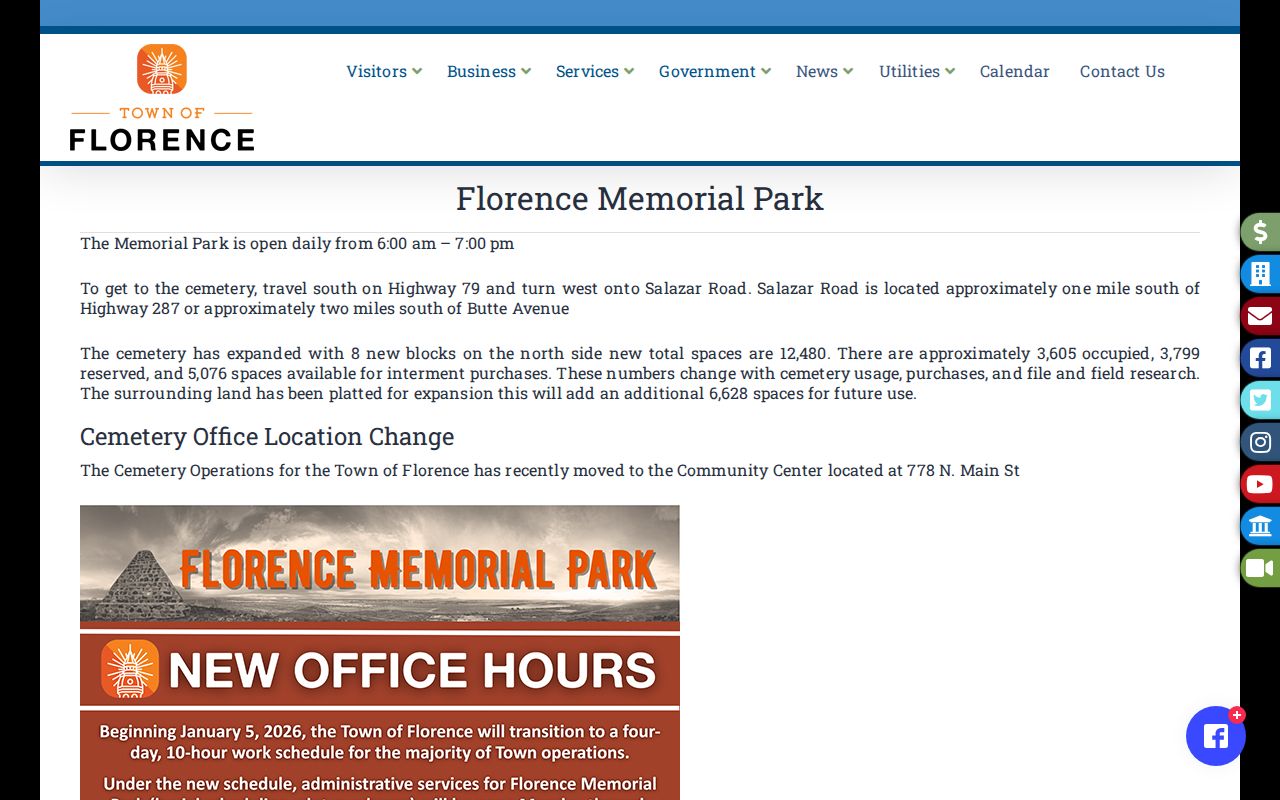
A plot or file can support the end of a household timeline, but it does not by itself prove the decedent lived at the target address.
Butte View Cemetery research shows the value of combining sources: burial evidence has been paired with the 1886 Great Register, occupation, citizenship, and Masonic affiliation. That Florence story is a model for corroboration. It is not permission to apply the same facts to a different person without records.
Limits on Florence Previous Residents
Owners and occupants are different groups. A deed can name a person who never occupied the parcel. A directory may omit someone under its publication rules. Renters and relatives can disappear between directory years, and closed vital records cannot be opened merely to fill a gap. Arizona protected-address laws may also keep a legitimate resident from ordinary public results.
Record each conclusion at the level the evidence supports: owner, named adult at the address, family member in a released census, permit applicant, probate party, or cemetery subject. Do not collapse those roles into “resident” without a source that supports occupancy. When a trail goes quiet, use the Recorder counter, Town Clerk request, Viney Jones Library reference desk, Pinal County Historical Museum, or the proper court clerk.
Lawful use. Florence previous-resident research supports family and house history. Never use address findings to track, intimidate, stalk, or harass a living person.